As one of the most important fixtures in the pharmaceutical calendar, CPHI Frankfurt 2025 will bring together global stakeholders from across the value chain to discuss where the industry is, and where it’s headed. The event offers a platform not just to connect and showcase, but to align your communications strategy around the forces reshaping the life sciences sector.
This year’s edition promises to be a landmark gathering, capturing the pace of change facing the life sciences industry today: an ever-changing global trade landscape, breakthroughs in next-generation therapeutics, and the promise and pitfalls of AI. Ahead of the event, we’ve identified five major trends shaping the conversation in 2025, and what they mean from a brand and communications perspective.
1. Authenticity is more important than ever
In a marketing landscape increasingly dominated by AI, authenticity can be a powerful differentiator. Research into behavioural biases shows that even in high-stakes B2B purchasing decisions, buyers respond to signals of genuine effort and human involvement.
A study conducted by behavioural marketer Richard Shotton found that when an identical ad was presented as having been created in 10 minutes by AI, only 38% of buyers trusted the brand. When the same ad was described as the result of a three-month, high-effort creative process, trust jumped to 59%. In an era where content can be produced instantly and cheaply, brands that communicate the care, skill, and originality invested in their work are more likely to be seen as credible and high-quality.
Why it matters:
Stakeholders want to partner with organisations they can trust, remember, and champion internally. An authentic brand supports not only customer acquisition, but recruitment, retention, and investment too.
Marketing implication:
Build trust by showing the human expertise, values, and consistency behind your brand. Communicate in ways that feel genuine and memorable, ensuring your authenticity resonates with both external stakeholders and internal teams.
2. Data-driven manufacturing & digital maturity
As companies face mounting complexity and pressure to accelerate timelines, Pharma 4.0 is shifting from buzzword to benchmark. Digital transformation is now a priority, with organisations integrating data and automation to streamline processes. Increasingly, the focus is on moving beyond isolated digital tools towards fully connected operations — supported by centralised systems, real-time analytics, and intelligent process control — to unlock greater efficiency and consistency.
This shift is not just about adopting new technologies, but about building the infrastructure and culture needed to support them. From harmonising data across global networks to deploying predictive analytics for proactive decision-making, Pharma 4.0 requires alignment across people, processes, and platforms. Companies that succeed will be positioned to reduce risk, ensure compliance, and create more agile, scalable operations capable of keeping pace with evolving market demands.
Why it matters:
Pharma 4.0 capabilities signal operational maturity. For partners and customers, it’s a marker of your ability to deliver reliably, scale efficiently, and adapt in real time. In an environment where speed, transparency, and compliance are paramount, digital maturity is a powerful strategic lever.
Marketing implication:
Communicate your digital strengths clearly — whether that’s data transparency, automated batch records, AI and machine learning capabilities, or process analytics.
3. From capacity to capability: The biologics boom shaking up CDMOs
The global biologics market is projected to grow from 450 billion USD in 2025 to over 1 trillion by 2035, with double-digit growth in emerging markets such as China and India. The shift is especially pronounced in areas like oncology and immunology, where antibody-drug conjugates (ADCs) and other next-generation modalities are driving demand.
With continued therapeutic innovation comes manufacturing complexity, and the CDMOs of today must be flexible, adaptable, and responsive in order to pivot to emerging modalities and the ever-changing regulatory landscape. The most innovative CDMOs are moving beyond capacity, offering integrated, flexible, and technology-rich platforms. They’re partnering early with biotechs to co-design processes, invest in capabilities, and accelerate the launch of innovative therapies.
Why it matters:
Drug developers are looking for strategic partners, not just manufacturing capacity. CDMOs must demonstrate the technical depth, platform flexibility, and scientific leadership required to navigate evolving modalities and regulations.
Marketing implication:
Position yourself as a specialist partner, not just a supplier. Craft narratives that reflect scientific leadership, platform-based innovation, and your ability to support complex, high-growth modalities.
4. Green chemistry & sustainable scale-up
This year’s CPHI Frankfurt introduces a brand-new Sustainability Supplier Zone — a clear signal that environmental responsibility is now front and centre in pharma. Sustainability-related sessions are expected to triple in capacity compared to recent years, reflecting a surge in both demand and dialogue. In just 18 months, CPHI has seen a 200% increase in the number of pharma sustainability experts and decision-makers attending its events.
Beyond carbon reduction and energy-efficient manufacturing, companies are rethinking how they manage waste, water, and sourcing practices to create more sustainable operations. Increasingly, this involves embedding sustainability throughout the value chain — by advancing green chemistry, renewable energy, and circular supply chains with transparent sourcing.
Why it matters:
Sustainability is no longer a ‘nice-to-have’, it’s a strategic imperative. Organisations that lead on ESG are not only more attractive to partners and investors, but also more resilient in the face of regulation, reputational risk, and resource scarcity.
Marketing implication:
Tell your sustainability story clearly and authentically. Share your sustainability roadmap, demonstrate measurable progress, and tell a story that balances data with human impact. Credibility comes from clarity, transparency, and authenticity.
5. Going global-local
As supply chains evolve, companies need partners who can deliver both global reach and local relevance. From reshoring strategies to emerging market access, flexibility and regulatory fluency are key. Success depends not only on physical footprint, but also on the ability to adapt operations, processes, and communications to fit diverse regional contexts. Companies that strike this balance can expand faster while maintaining trust and compliance.
Building strong local networks is essential, from suppliers and regulators to healthcare providers and patient groups. At the same time, global oversight and harmonised standards ensure quality, reliability, and efficiency. Organisations that master this dual perspective are best placed to manage risk, accelerate market entry, and meet patient needs wherever they arise.
Why it matters:
Expansion doesn’t just mean more sites, it means better knowledge of local markets, policies, and patient populations. The ability to pair global scale with regional nuance is becoming a decisive factor in competitive differentiation.
Messaging implication:
Emphasise your agility and adaptability. Showcase how you scale with your customers, navigate regional complexity, and bring global consistency with local insight.
Final thoughts
The pharmaceutical landscape is changing fast, and companies that can align their brand and communications strategy with these shifts will be better positioned to grow, lead, and partner effectively. As we head to CPHI Frankfurt, now is the time to sharpen your story: to clarify your value, highlight your differentiation, and connect with stakeholders across the industry.
Are you heading to CPHI Frankfurt?
At Notch Science Marketing, we work with life science companies to turn complex challenges into meaningful communications.
Book a meeting with our team at CPHI to see how we can support your brand.
We are what we eat, and international consumers are seeking to optimise their nutrition to achieve their health and beauty goals. This has fuelled new growth in the nutraceutical sector, driving innovation and encouraging diversification. In particular, consumer demand for prevention and personalisation is pushing companies to expand into lifestyle, wellness, and “food as medicine”.
As a case in point, many exhibitors at Vitafoods Europe 2025 showcased offerings spanning both pharmaceutical and nutraceutical spaces. Amongst a sea of thought leaders at the event, the Notch team was in attendance, bringing a keen eye for current marketing and ingredient trends. We took the opportunity to hear directly from industry movers and shakers on important considerations and opportunities in the sector.
Below is our shortlist of 5 pivotal developments to look out for.
1. The stars of the nutraceutical industry: Collagen, GLP-1 agonists, and magnesium
Collagen, GLP-1, and magnesium are going strong in the nutraceutical industry. Collagen has achieved prominence for its ability to promote beauty and longevity, with some interest in its applications for sports and metabolic improvements as well. Meanwhile, given the popularity of FDA-approved GLP-1 medications like Ozempic and Wegovy for weight loss, natural GLP-1 boosters and related products are a hot topic. At the same time, magnesium is maintaining its upward trend as consumers seek out its beneficial effects on mental wellbeing and muscle function, among other applications. The impact of specific magnesium sources is increasingly emphasised, with different types of magnesium being advertised.
2. Beauty from within is here to stay
Ingestible beauty supplements have taken the world by storm and, with nutraceutical and beauty companies expanding into the category, it’s a trend that will continue to grow in momentum. From healthy aging to skin rejuvenation, ingredients that promote beauty from the inside out are set to be in high demand for the foreseeable future.
3. Women’s health is no longer niche
Supplements that address the unique health challenges faced by women are on the rise. It’s an exciting and welcome trend that will see more options on the market, covering everything from menstruation to fertility, pre- and post-natal health, perimenopause, menopause, polycystic ovarian syndrome (PCOS), urinary tract infections, and more.
4. Convenience is paramount
For today’s busy world, supplement manufacturers are increasingly prioritising the development of convenient, on-the-go formats, like orosoluble powders and gummies. Accessibility is a primary concern, and ingredient producers are keen to address this with targeted marketing that speaks to the application flexibility of their ingredients.
5. Clinical data is increasingly emphasised
The nutraceutical industry faces a sceptical public that needs reassurance on whether ingredients will deliver on their claims. As a result, the B2B world is seeking out tried and tested ingredients with clinical data that can be used to persuade uncertain consumers. Many nutraceutical ingredients now come with clinical data backing, a growing expectation as regulatory scrutiny and consumer demands for transparency continue to rise.
Are you launching or rebranding an exciting nutraceutical ingredient?
Our full-service marketing agency is here to help. Leveraging the latest market insights, our experienced team of scientific writers, strategists, and creatives can craft a stand-out campaign that resonates with your audience — whatever your goals.
If you’d like to learn more, Notch is offering free strategy sessions to explore how we can position your nutraceutical brand to stand out from the crowd.
Get in touch to book one in and discover how our expert team can give you a competitive edge.
Nutraceutical supplements marketed for their beauty benefits, known as nutricosmetics or beauty-from-within supplements, have taken the world by storm. Odds are you’ve seen these ingestible beauty supplements in your local pharmacy. Improving the strength and shine of hair, revitalising skin and nail health, and helping consumers to achieve their ideal weight are just a few examples of their wide-ranging applications.
There has been an explosion of beauty-from-within products — usually formulated from a short list of familiar, research-backed ingredients, like collagen or vitamin C. This limited selection of in-demand ingredients, alongside market saturation of branded products, has created a significant challenge. How can a new branded beauty-from-within ingredient cut through the noise in a crowded and competitive industry? The answer, of course, lies in clever and cognisant marketing.
Ahead of Vitafoods Europe 2025, we share practical strategies for positioning your nutricosmetic ingredient to cut through the noise.
1. Leveraging industry insights for informed messaging
As with most industries, a stand-out marketing campaign for a nutricosmetic ingredient starts with excellent knowledge of your target audience and the industry landscape they operate in. Below are just a few priority trends for businesses operating in the beauty-from-within space that could feed into the messaging for B2B marketing campaigns.
More than skin deep
As the name suggests, beauty-from-within supplements work from the inside out in the form of oral supplements. These can directly repair damage and nurture beauty that is more than skin deep, aligning nicely with the wider end-consumer focus on optimised nutrition and holistic wellness.
Celebrate inner radiance
The beauty industry is placing increasing emphasis on celebrating natural beauty. Alongside this, there has been a cultural shift in how ageing is perceived. When working on campaign messaging for a nutricosmetic, you could consider avoiding phrases such as ‘taming frizz’ or ‘turning back the clock’ for wording with a more positive focus that spotlights healthy ageing and unleashing inner radiance.
Communicate proven science
Companies producing nutricosmetics need to combat scepticism from consumers, so they are seeking ingredient solutions that have been proven to deliver real beauty benefits. That’s why in the marketing for a branded ingredient, it is vital to effectively communicate any clinical trial results or other persuasive data that proves the product will deliver on its beauty claims.
Clean and natural
In today’s more environmentally aware and health-conscious world, there is increased demand for natural, sustainable ingredients. As a result, communicating any natural or environmentally-friendly elements in your branded ingredient can help to give your product a boost. Naturally, though, it is vital to make sure these claims can be verified and that campaigns don’t accidentally stray into greenwashing.
Don’t neglect end-consumer benefits
It can be tempting to focus on communicating formulation benefits, such as flowability or stability, and these are important. After all, an ingredient that can’t be formulated easily will create significant problems for R&D. However, marketing and business development leads in the B2B space will also be on the lookout for ingredients that can satisfy consumers down the line. Don’t forget to shout about it if your ingredient reduces unpleasant side effects, enhances taste, or otherwise contributes to an improved consumer experience.
2. Crafting memorable visuals
In addition to informing the messaging, an excellent understanding of the industry landscape will also empower a more impactful creative design. This will likely be the first element that gets noticed, so it must be both memorable and on brand. For the nutricosmetic B2B market, a luxurious look and feel with clear beauty cues is often the order of the day. Before launching full throttle into design, though, remember that you can’t stand out if you end up looking just like everyone else. The best way to avoid this is to know your competition. Ask yourself, what kind of creative visuals are other companies in your space promoting? Are there any novel approaches used by B2C beauty companies that could inspire more unique and eye-catching designs?
3. Aligning with the buyer journey
Mapping out the buyer journey is another essential step to drive engagement and conversion down the line. An incredible campaign with amazing visuals and memorable taglines won’t go anywhere if the buyer journey is poorly understood and the wrong channels are being leveraged. Equally, a content audit may be needed to identify any gaps in the content funnel that will negatively impact marketing success.
4. Bringing it all together with purpose
A marketing campaign needs to form a cohesive narrative that is clear on what it wants the target audience to think, feel, and do. Getting there means following a simple recipe with unskippable steps. Mix together relevant and actionable insights into the industry landscape, stir in some competitor and product analysis, add a heaping teaspoon of creative genius, and let it cook.
How Notch can help
Are you working to establish or refresh your nutraceutical brand?
Notch’s skilled team of scientific writers, marketing experts, and ingenious creatives can provide full-service marketing support for nutraceuticals and nutricosmetics. Our capabilities encompass everything from strategy through to execution, including:
Competitor and market analysis & surveillance
Strategic and creative consultancy
Product positioning, brand development, and brand positioning
Messaging matrix development
Integrated campaign planning and execution
Together, we can develop the brand positioning — or re-positioning, as the case may be — needed to turn the raw ingredients of today into the hero products of tomorrow.
Are you attending Vitafoods Europe 2025?
The Notch team will be at the event and we’d love to talk. Whether you’re exploring a new product launch or seeking to re-energise your existing brand, let’s build a marketing campaign that truly reflects your ingredient’s value.
Book a strategy session with Notch at Vitafoods Europe 2025 to discuss how we can transform your exciting nutricosmetic ingredient into a market leader.
In the dynamic pharma and biotech sector, staying ahead means seizing every opportunity to connect, engage, and grow. Events like CPHI Milan 2024 are invaluable for business, technical and marketing industry leaders, offering a platform to showcase innovations, build relationships, and drive business growth.
But with so much at stake, how can you ensure that your presence at CPHI Milan translates into tangible success?
Here are five key strategies to help you maximise your impact at this essential event:
1) Embrace Hybrid Strategies: Expand Your Reach Beyond the Booth
While in-person attendance at events like CPHI Milan has rebounded to pre-pandemic levels, the power of digital engagement shouldn’t be overlooked.
Incorporating virtual tours, on-demand webinars, and online content can significantly extend the reach of your on-site activities, allowing you to engage a global audience that might not be physically present.
In addition to these digital elements, leverage digital sponsorships and social media to maintain visibility throughout the event lifecycle. These tools not only amplify your message but also keep your brand relevant and accessible before, during, and after the event.
Grow Your Audience with a Hybrid Approach.
2) Establish Thought Leadership: Be Seen, Be Heard, Be Influential
To stand out in the crowded halls of CPHI Milan, positioning yourself as a thought leader is essential. Engaging with media before the event can secure valuable opportunities for interviews, panel discussions, and press coverage, enhancing your credibility and expanding your reach.
If you’re launching a new product or service, applying for relevant awards at CPHI can significantly boost your exposure. Recognition as an industry leader not only builds trust but also attracts potential customers to your booth.
3) Leverage Milan’s Prime Locations
Strategic out-of-home (OOH) advertising in Milan’s busiest areas can significantly enhance your event visibility. High-traffic spots near the event venue, such as airports, train stations, and major walkways, offer prime real estate for impactful advertising.
When planning your OOH campaign, focus on clear, consistent messaging that leaves a lasting impression on event attendees. Simple yet powerful visuals and concise messaging can make your brand stand out in a sea of competitors. Find out more in our whitepaper!
Key transport links are ideal for OOH ad space.
4) Optimise Your Booth Strategy: Create a Memorable Brand Experience
Your booth at CPHI Milan is more than just a space—it’s an opportunity to create a memorable experience that resonates with attendees. Use dynamic visuals, interactive elements, and hands-on demonstrations to draw visitors in and keep them engaged.
Ensure that all booth activities align with your overall brand messaging and aesthetics. Consistency across all touchpoints helps reinforce your brand identity and ensures that visitors leave with a clear, positive impression of your company.
5) Maintain Momentum Post-Event: Keep Your Brand Top of Mind
The end of CPHI Milan doesn’t mean the end of your marketing efforts. To maximise your return on investment, prompt follow-up is essential.
Personalised emails offering additional information or exclusive deals can keep your brand top of mind.
Additionally, sharing post-event content through blogs, newsletters, and social media can engage those who couldn’t attend the event. This approach not only sustains the momentum but also broadens your reach to a wider audience.
Partner with Experts
CPHI Milan is a pivotal event for pharma leaders. By embracing hybrid strategies, establishing thought leadership, leveraging local advertising, enhancing booth engagement, and maintaining momentum post-event, you can transform your participation into a powerful driver of business growth.
At Notch, we specialise in crafting tailored event strategies that ensure success. Let our expert team guide you in making a lasting impact at CPHI Milan and beyond.
The Notch team attends CPHI North America 2024
Attending CPHI Milan?
Contact us now to arrange a meeting with our pharma marketing experts.
CPhI Milan 2024 is set to be an exciting event, taking place from October 8th to 10th at Fiera Milano, Italy. Celebrating its 35th edition,
CPhI Milan is a premier gathering for the global pharmaceutical industry, bringing together over 62,000 attendees and 2,400 exhibitors from more than 166 countries.
This event offers unparalleled opportunities for networking, learning, and collaboration across various sectors of the pharma market.
The global personal care ingredients market is worth approximately $12.85 billion, with over 16,000 chemicals registered for use in the personal care and beauty industry. Yet pre-20th century, for most people personal care was limited to a bar of soap and nothing more. So how did this industry boom from bar soap to billion-dollar business? Let’s take a look at the chemistry, history and trends of personal care.
The background to the bubbles
Soap is made by reacting triglycerides (natural fats) with alkali hydroxides (usually sodium) to produce salts of fatty acids. These molecules are made up of both water-soluble and oil-soluble groups, making them surfactants (more on that later), and perfect for cleaning.
The first recorded soap was created by the Babylonians from fats boiled with ashes around 2800 BC. From then on, soap making developed concurrently around the globe using locally available ingredients. Plant ashes and animal fats were most commonly used, but olive oil was also popular to produce a softer soap, and aromatic plants could be added to provide scent – introducing the importance of sensory properties in personal care.
Production remained small scale until the mid- to late 19th century, when the industrial revolution meant bar soap could be mass-produced. Paired with the advent of universal indoor plumbing, the doors were opened to the development of more sophisticated personal care products. In 1900, the first “water-in-oil” emulsion was patented (hello moisturizer!); the 1920s saw the introduction of liquid shampoo, and the 70s and 80s welcomed cationic surfactants into conditioner formulations (perfect timing for those perms!). So, what goes into the bottles in our bathrooms today?
Key chemistries
The ingredients in personal care products such as shampoo, shower gel or hair conditioner are labelled according to the International Nomenclature of Cosmetic Ingredients (INCI). They’re also listed in order of concentration (main ingredient first), that’s why water goes by “Aqua” and is usually number one. There are over 16,000 INCI registered chemicals, but don’t let that scare you – most of them can be grouped into key categories. Here are four examples with interesting chemistries:
1. Surfactants
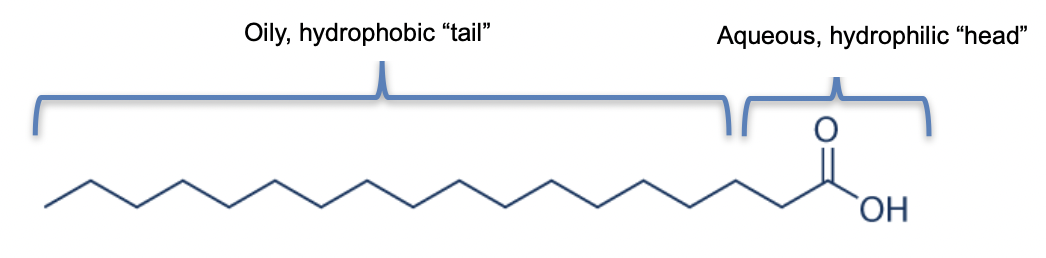
Surfactants are the workhorse of the personal care formulator, thanks to their unique structure. Part water soluble (hydrophilic), part water insoluble (hydrophobic) − see figure 1 −these “surface active agents” can decrease surface tension, the cohesive forces between the molecules in a liquid. This leads to a wide scope of functionality, including the magic trick of mixing oil and water!
Figure 1: Example of a surfactant molecule, stearic acid: the original soap.
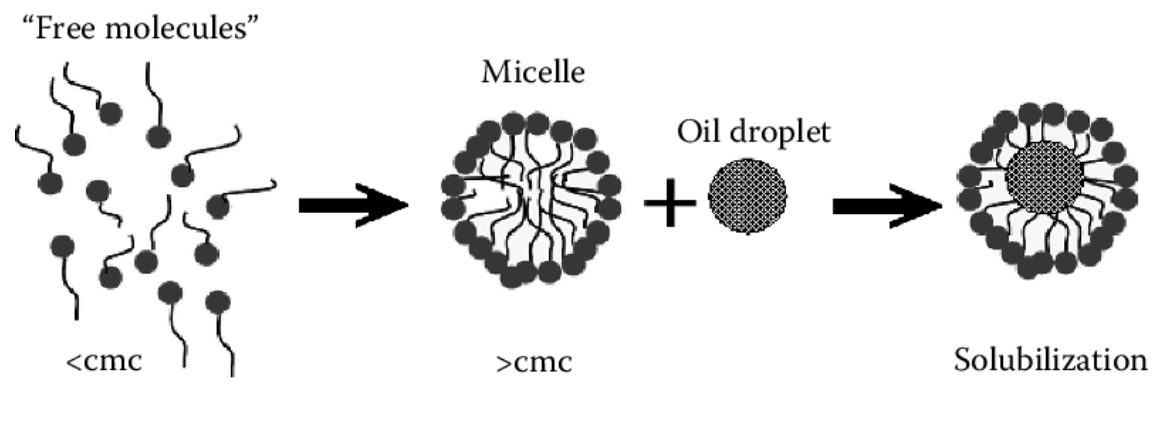
Surfactants are also the masters of self-assembly, spontaneously forming micelles in solution. Their oily tails congregate together to reduce the unfavourable oil-water surface interactions, resulting in a spherical structure. Why does this matter? Micelle formation enables surfactants to solubilise dirt as well as emulsify oil and water (see figure 2) – essential in many personal care products.
Figure 2: Micelle solubilising dirt/oil
Foaming is another talent of surfactants. The attraction between the water molecules is weakened in the presence of surfactants, so the surface tension between air and water is lowered, allowing bubbles to form. Finally, some surfactants can act as conditioning agents. By adsorbing on to the surface of a hair cuticle via electrostatic attraction, they coat and smooth the hair, and making it easier to comb.
Surfactants are grouped according to their charge, which is key in determining their primary function in a personal care formulation − table 1 shows examples found in everyday products.
Cocamide Monoethanolamine
Fatty alclohol ethoxylates e.g. Laureth-3
2. Oils, fats and waxes
Oils, fats and waxes are the original moisturisers, helping to keep the skin or hair moist by providing a barrier that prevents water loss. Their physical properties can also help to thicken and structure a formulation, enhancing sensory properties for the consumer.
Natural oils are made up of fatty acids that have medium to long (6+ carbon atoms) hydrophobic hydrocarbon chains, see figure 3 for an example. It’s these chains that help coat the skin and lock in moisture. They also affect the “thickness” or viscosity of the solution – the longer the hydrocarbon chain, the higher the viscosity, or “thicker” the oil feels.
Commonly used natural oils include jojoba, avocado, olive, sunflower, soybean and coconut oil, which has even been shown to repair and protect damaged hair.
Figure 3: Lauric acid, a fatty acid with a chain length of 12 carbon atoms. Lauric acid makes up approximately half of the composition of coconut oil.
3. Polymers
Polymers are macromolecules – large molecules made up of repeating units, or monomers. They’re multifunctional, but their most common application in personal care is as thickening agents. Like oils, polymers can also act to increase the viscosity of a formulation. This not only enhances the “feel” of the product, but also improves spreadability and helps to ensure an optimum flow rate when you pour it from the bottle – rather than dripping straight from your hand to the shower floor!
Unlike oils, polymers don’t just rely on high molecular weight in thickening applications. Polyacrylates (polymers of acrylic acid) are commonly used in personal care formulations. They’re hydrophilic, and able to absorb as much as 100 to 1000 times their mass in water, to form a gel. The viscosity can be fine-tuned by varying the concentration and pH, making polyacrylates a really useful tool for formulators.
Polymers can also condition and moisturise. A common example used in hair conditioner is Dimethicone, a versatile hydrophobic silicon-based polymer that coats the hair to form a barrier against moisture loss, smoothing the hair’s surface and leaving a “shine”.
4. Chelates
Metal ions found naturally in water such as Magnesium (Mg2+) and Calcium (Ca2+) can catalyse the degradation of oils and fatty acids in personal care formulations, reducing shelf life. They can also make a product less effective, by reacting with surfactant molecules and reducing functionality.
Ever noticed a chalky build-up in your shower or kettle? You probably live in a hard water area. The “harder” the water is, the more metal ions are present, and the more product you’ll need to use to get the same level of detergency. That’s why you might find yourself getting through more shampoo in London (a hard water area) than in Manchester (a soft water area)!
The word chelate is derived from the Greek chela meaning crab claw. Adding chelating agents to a formulation sequesters the metal ions, binding them (like in a crab’s pincer) so they can no longer react with the ingredients. A common chelate is disodium EDTA. This molecule uses negative charges to bind the positively charged metal ions – see figure 4.
Figure 4. Disodium EDTA has negatively charged carboxylates and amine groups that can bind positively charged metal ions from solution.
Top trends and future focus
Despite all the chemistry behind it, personal care is very much a consumer led market influenced by wider global trends.During the pandemic, the industry saw an unprecedented increase in demand. With spa treatments, beauty salons and holidays off-menu, consumers chose to spend more on DIY self-care at home.
Today, there remains an increased focus on health and well-being, with more people setting aside time to take care of themselves. Products like face masks and luxury bath and skin care remain popular, using ingredients such as essential oils, argan oil and aloe vera. Premium active ingredients are also in demand, such as retinol for collagen building and hyaluronic acid for natural skin plumping.
The growing consumer awareness of climate change and demand for sustainability is leading to the development of plant-based ingredients such a bio-surfactants derived from sugar, as well as more transparency on how materials are sourced, and innovative packaging solutions like solid shampoo bars and refill options.
However, whether commodity or premium, synthetic or bio-based, the fundamental chemistries of personal care remain the same.
And next time you pick up a bottle of shower gel, you can appreciate the myriad interactions and functionalities of the molecules inside.
Camps International is an ethical school expeditions organisation that runs volunteering trips for young people in the UK, UAE and Australia.
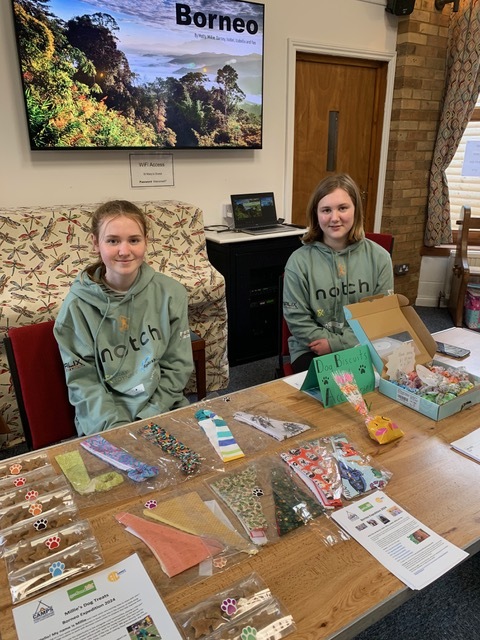
This year, Notch Communications is sponsoring a student, Millie Rhodes, as she fundraises for her trip to Borneo with Camps International. In Borneo, Millie will be undertaking work with sustainable projects within the local community.
A few months before she sets off, we sat down with Millie to get to know more about the work she’ll be doing and what she’s most excited about!
Thank you, Millie, for taking the time to talk to us. First of all, what initially inspired you to undertake this opportunity to fly off to Borneo?
I was lucky enough to be given this opportunity with Camps International through my school. I am keen to broaden my horizons and learn about the day-to-day lives of different communities.
I also want to develop a greater understanding of the world-at-large and learn more about different cultures that I wouldn’t otherwise have the chance to interact with!
We understand that you have organised number of fundraising activities in order to pay for your trip. Could you tell us a bit more about these?
The cost of the trip was relatively high – coming in at around £4500 – in addition to essential travel expenses such as vaccinations. When raising this sum of money, I found that organising a big variety of activities was the most important thing.
One of the main activities I did to raise money was making and sell home-made dog biscuits! Running this taught me a lot about enterprise. Things like keeping my prices low by sourcing the ingredients at discount supermarkets, like ALDI, was really important. I’ve also utilised a range of channels to sell my biscuits and get my message out to as many people as possible. Using social media really helped – my first post resulted in over 50 orders! A local café also sells around 30 bags of my dog treats a week on my behalf.
Raising money alongside the other members of the expedition team has been really hard work, but also very rewarding. From quiz nights to Zumbathons, engaging with the local community has strengthened my own communication skills and helped instil me with the confidence to manage events, time and finances. It has also helped me develop a greater sense of resilience when overcoming challenges and managing the ups and downs that come with organising activities like these.
What kind of community work will you be doing? Have you done anything similar before closer to home? How will it benefit the local community?
During my expedition, I’ll be taking part in activities that not only help the local communities, but also the environment and the local ecosystems which have been devastated by deforestation driven by palm oil demand. These include things like building shelters, improving sanitation facilities for the local people and cleaning beaches. By engaging in a range of community work, we’re hoping to benefit the local community in a wide range of ways.
While I’ve never done anything like this and it sounds quite daunting, I’m really excited by the challenge and can’t wait to get stuck in!
While you’re in Borneo, how will you be engaging with the local community?
I’m looking forward to making new friends with the local children. I’ve been told they play a very good game of football, so as a goalkeeper, I’m looking forward to the challenge! I don’t know a huge amount about the local culture, apart from the talks I’ve given, so while I’m there I’ll be learning as much as I can about the culture, cuisine and language!
In what ways do you hope this experience will impact your personal growth and development?
I’m hoping that this trip will broaden my perspective of the world and make me more appreciative of other cultures. I’m also very excited to earn my PADI open-water diver qualification, which will both provide me with a lifelong skill and enable me to appreciate the exotic marine life in Borneo!
I’ve found that a big part of the experience is not the actual trip, but the fundraising itself which has helped me grow my teamwork, problem solving and communication skills.
Lastly, what message or advice would you like to share with other teenagers who are considering participating in trips like yours?
Take the opportunity and go for it!
With our ever-evolving understanding, it’s clear that genetics is a fascinating topic affecting many parts of our lives. These three genetic mysteries will make you wonder where humanity is heading.
From health to food to sport, the world of genetics stretches into our day-to-day life in ways we probably never realise. You might have noticed that it’s popular in the news to present sensationalist articles about genetic advancements alongside ominous warnings about how it will affect the future. As someone who has worked in a genetics lab, these often don’t tell the full story and can obscure the genuine, exciting research being done to uncover long-standing genetic mysteries. Read on to discover three genetic mysteries that are changing the way we look at our DNA and the future of humanity.
Reduce the spread of malaria with gene edited mosquitos
Engineer crops to withstand extreme weather
Treat a range of human diseases
CRISPR is revolutionising experimental therapies for genetic disorders ranging from sickle cell disease to blindness. In cancer biology, CRISPR has been identified as a potentially robust treatment tool due to its simplicity and efficiency. However, since gene editing is still in its infancy, there is growing concern around where society should draw the line. Removing or editing inherited disease-causing genes could risk introducing undesirable changes to future generations.
In 2018, a Chinese biophysicist announced that he had created the first genetically altered babies. He had used CRISPR to edit embryos to make them less susceptible to HIV, resulting in the birth of the CRISPR twins, Lulu and Nana. The announcement was met with outrage from scientists and ethicists; the biophysicist was later arrested for medical malpractice. It has since been reported that the alterations made to the twins’ DNA is not expected to make them immune to HIV. However, it is believed that the edits could improve neuroplasticity, which may result in improved brain recovery and greater academic success. How this may affect future generations is something we will not truly understand for centuries to come.
In March 2023, the Third International Summit on Human Genome Editing is expected to take place. Scientists, ethicists, and stakeholders from around the world will discuss the current state of the technology and the development of regulations, among other topics. So, expect to hear more about how CRISPR might change the world.
The gender spectrum
Biological gender is often thought to be black and white. However, there are many naturally occurring genetic variations that can result in slightly different development, possibly effecting outward looking gender and fertility. These are often referred to as differences in sexual development (DSD).
DSDs usually occur when there is an alteration to an individual’s X or Y chromosomes – the ones that determine biological gender. One study suggests that up to 1.7% of the population has an alteration to these chromosomes and that approximately 0.5% of people have clinically identifiable variations. (For comparison, around 2% of the population have green eyes!)
DSD came into the public eye when the gender of double Olympic gold medallist, Caster Semenya, came under scrutiny. Media reports claimed she had both male and female characteristics including a higher-than-normal level of testosterone. A World Athletics rule around DSD led to Semenya and others being banned from the Olympics due to a ‘significant competitive advantage’. A phrase that has since been changed to ‘higher athletic performance.’ In 2021, World Athletics acknowledged potentially misleading claims around DSD and called for more studies on the subject.
While gender is a particularly controversial subject in sport and athletics, it’s important that we allow our definitions of gender to be broad and flexible. This way we can appreciate the reality of biological and genetic diversity in our population, and work towards a fairer and more equal society.
Mixing it up with mosaicism
In 2002, an American woman, Lydia Fairchild, was pregnant with her third child. When she separated from her partner, she applied for child support. However, DNA testing suggested she was not the mother of her two children and Lydia was taken to court for suspected fraud.
During the birth of her third child, a judge ordered an observer to be present. However, two weeks later, DNA tests indicated that Lydia was not the mother of that child either.
Following further tests, it was discovered that Lydia had two separate cell lines or DNA profiles. The DNA in her skin, hair and blood didn’t match those of her children, but DNA from a cervical smear eventually did, and Lydia became known nationwide as her own twin.
Domestic cat chimera with turtle color sits in a pond in the garden
This phenomenon, where an organism has two different DNA profiles as opposed to one, is called mosaicism. These individuals may also be called chimeras. Chimeras are relatively common in marine environments, where colonial animals, like corals, regularly form fusion individuals. Interestingly, chimeras are not rare among household cats either. In fact, most male tortoiseshell cats are chimeras and can be identified by their distinctive coat patterns.
In medical research, biologists have been creating chimeras for decades. This has included creating mice with human immune systems or growing human organs in pigs for transplants. While the aim of this work is to develop new treatments, the creation of these animal-human chimeras is controversial.
In terms of human genetic analysis, it’s now common for scientists to bear in mind the possibility of a naturally occurring mosaic genomic profile and the implications this can have on the development of disease. However, further research is needed before mosaicism can be effectively used as a biomarker for early disease detection.
Conclusion
Genetics is a fascinating world of science, ethics, and family. Understanding it can open our eyes to the diversity of humanity today and our involvement is likely to have a huge impact on who we are tomorrow.
At Notch our team is made up of scientists and marketeers, specialising in life science, biotech and chemistry marketing. To learn more about how Notch’s creative B2B marketing communication solutions can help you in the science and technology space, click here to get in touch: https://notchcommunications.co.uk/get-in-touch/
Meet Madi
Following her undergraduate degree in Biology with Biomedicine, Madi worked at Manchester’s Genomic Laboratory Hub as a Senior Genetic Technologist. There, she managed multiple NGS cancer workflows, with a team that provided life-saving diagnostic and prognostic information. A writer at heart, Madi left the lab and joined Notch, in order to communicate scientific developments and innovations. Out of work, Madi is an animal lover and creative writer.
Ask anyone that knows me, and they’ll tell you that I love podcasts (and that they’re sick of my endless recommendations). I think that the immediate and intimate nature of the format makes podcasts a unique vehicle for powerful storytelling and you can often find niche topics explored in a depth you can’t find anywhere else. All you need is your phone and a pair of earbuds, and you have instant access to more than 2 million different podcasts, totalling 48 million episodes, available to you while doing the dishes or catching the bus.
I’m not alone in my podcast obsession. In 2020, 485 million people listened to podcasts worldwide and weekly audiences have doubled since 2017. Additionally, not only are there more listeners than ever before, but those listeners are more diverse. This is a testament to the accessibility of podcast production: anyone with a microphone and some editing software can create and publish across all the mainstream platforms. The popularity, accessibility, and flexibility of podcasts — facilitated by advances in smartphones, speakers, and laptops — has driven the phenomenal growth of the industry, with the global podcasting market estimated at $11.5 billion in 2020.
In 2020, there were initial fears that the pandemic would damage the podcasting industry, due in part to changing working habits and fewer commutes. However, audience listening behaviours quickly adapted to the new normal and business is better than ever. Weekly podcast listeners are consuming 30 minutes more per week than before the pandemic, and the global market size of podcasts is expected to keep growing by around 31 percent every year.
Utilising podcasts in the post-pandemic marketing landscape
So, podcasts are clearly big business, but why is this important for the life sciences industry? COVID-19 has expedited a digital transformation in almost every business sector. With the heightened spotlight from the pandemic, many companies have recognised the true importance of their online presence and digital offering. As a recent Deloitte report on the life sciences industry stated, a “digital transformation is no longer a buzzword, but a strategic imperative”. In other words, it is now vital for businesses to maintain an online presence. An ideal way to do this is through digital, content-driven marketing and thought leadership, and podcasts can be a key piece of this puzzle.
Used appropriately, podcasts can be a powerful tool in the content arsenal and the ideal medium for demonstrating thought leadership. The flexibility of the format allows for more specific and relevant topics to be explored. The direct and intimate engagement with the audience—coupled with the relaxed, informal nature of podcasts—can lower barriers between listener and host, and help build those all important customer relationships. Podcasts can also be a great way to drive your audience towards other content, products, or services, break up text-heavy webpages, or encourage dialogue and engagement when shared on social media. In a crowded competitive field, a podcast can be a great, dynamic form of content that will help your business stand out.
Although it might seem daunting to release a podcast, there are some easy wins to be had. For example, interview-based podcasts, while being the simplest format, are consistently the most popular with listeners. Each guest brings their own unique thoughts, opinions, and ideas which can stimulate fascinating conversations, and guests will often cross-promote within their own networks, expanding your podcast’s reach.
Podcasts are also a versatile format where you can successfully try out many different styles and approaches. All good hosting platforms allow you to glean insightful metrics, so it is easy to experiment and discover what works. Most importantly, podcasts can help to humanise your brand in an increasingly digital marketing landscape. In a time when developing and maintaining a relationship with your customers is more important than ever, podcasting can be invaluable. And if you aren’t sold yet, setting up a podcast has never been easier, with a huge array of podcasting platforms and editing software available. All you need to do is make use of the resources and expertise that your company already has to showcase your unique position in the market.
The podcast advertising boom
As well as being a beneficial addition to your content portfolio, podcasts can also be a great way to advertise products or services directly to listeners. This is for two main reasons. Firstly, audio continues to form more of the content that people consume online, with podcasts increasingly dominating this landscape. In the US, mobile time spent listening to audio content is greater than time spent on social media, videos, and gaming, and podcasts’ audience share of ad-supported audio has nearly tripled since 2016. Secondly, listeners tend to be more receptive to ads on podcasts than on other platforms, and are more likely to remember and follow up on them too, especially if they’re a long-time listener. This is because podcast ads are often read by the hosts, making them feel less intrusive and more trustworthy.
All of this makes podcasts a very attractive prospect for marketers, so much so that the biggest players in the audio streaming industry are desperately vying to control the space. The current market leader, Spotify, has continued to heavily invest in their all-encompassing advertising platform, which will allow advertisers to make their own highly targeted custom ads and obtain detailed real-time metrics on ad delivery, performance, and listener engagement. They will be able to reach the whole of Spotify’s listenership, including their own podcasts and those published on Spotify-owned hosting platforms Megaphone and Anchor. This is different from the title-by-title basis that has typically been how marketers have placed podcast ads, and until now has limited the scale at which they could be distributed.
The push into the advertising arena by Spotify and other streaming giants indicates a step change in the perception of podcasts as an advertising platform over the last few years. In a survey by Westwood One and Advertiser Perceptions, it was found that between 2015 and 2020 the number of marketers who said they would likely advertise in a podcast nearly quadrupled. Podcast ads are going to keep expanding, with estimates that advertising spend will hit $1.7 billion dollars by 2024 — an annual increase of almost 20 percent. Clearly, now is the time to be investing.
Time to harness the power of podcasts
The podcast industry has seen phenomenal growth over the last decade, thanks to increasing accessibility and huge popularity. For the life sciences, podcasts provide a great opportunity to better engage with their target audience, either by utilising podcasts as a vehicle for thought leadership in an increasingly digital marketing landscape, or by leveraging the latest advertising technologies to reach and understand those audiences better than ever before. I think it is time for the industry to jump aboard the podcasting train, because it isn’t slowing down any time soon.
If you enjoyed this blog and would like to learn more about podcasting in science, look no further than our in-house podcast channel, The Scientific Podcasting Network.
As we emerge from the COVID-19 pandemic, it is becoming apparent that we have only seen the tip of the iceberg in terms of the impact the pandemic has had on our health. For example, a recent study has suggested that up to 740,000 potential cancer cases have gone undiagnosed as a result of the pandemic and the British Medical Journal’s has published findings that show COVID-19 has significantly worsened the obesity epidemic in the UK
But what about our mental health? It will come as a surprise to none that the pandemic caused widespread anxiety and isolation in the UK, with young people being hit the hardest. The mental health charity Mind reports that 9 in 10 young people reported worse mental health as a result of the pandemic. Further studies of mental health have also shown a 20% increase in under 18s seeking emergency mental health care.
It seems that the UK mental health crisis is reaching an unprecedented level.
In this blog, we will be delving into the brain to better understand the surprising chemistry of your mental health.
The common disorders
Some of the most common mental health disorders, and those most often referred to by the term ‘mental health’, are anxiety and depression. Symptoms vary between individuals but are generally categorised in the following way:
Anxiety is what we feel when we are worried, tense or afraid – particularly about things that are about to happen, or which we think could happen in the future.
Depression is a low mood that lasts for a long time and affects your everyday life.
In most individuals, the root cause of either condition is generally unknown. Nevertheless, environmental and situational factors such as loneliness, money worries and bereavement can often act as a trigger for these conditions. Humans are not built equal, however: researchers and medical professionals have recently identified certain brain structures that leave individuals more susceptible to developing mental health conditions.
What are neurotransmitters?
Before we talk about the chemistry, we need to understand what neurotransmitters are and why they are so important in our brain. Every human body contains a nervous system, a vast network of 7 trillion nerves stretching from your brain to your toes, controlling your movement and balance. Inside each of these nerves, we have a collection of neurons, sometimes called nerve cells. Neurons can be thought of as our body’s communication network, passing messages to each other across your entire body. The messages that neurons carry are actually chemicals called neurotransmitters.
The messages your neurons send can be broken into three categories: excitatory, inhibitory and modulatory.
Excitatory neurotransmitters generate a signal in the next neuron and can be thought of as a fire spreading through the chain of neurons. A great example of these neurotransmitters is adrenaline. Adrenaline is an electrical signal that triggers your flight or fight response, causing your body to be on high alert.
Inhibitory neurotransmitters block signals in the next neuron and, to use the fire analogy, cause all neurons in the chain to put up firewalls, blocking the fire from spreading. You can see this in action after a long run when neurotransmitters called endorphins are generated. These neurotransmitters cause your neurons to block pain signals giving you a ‘runner’s high’.
Modulatory neurotransmitters are a little different and don’t just affect the chain of neurons, but rather all neurons. By regulating the messages neurons are receiving, these neurotransmitters allow us to relax or can cause us to feel stress. Serotonin is a good example of a modulatory neurotransmitter. It helps us feel happier and aids restful sleep.
Do they have chemistry?
In recent years, researchers have begun to observe that too little or too much of certain neurotransmitters can cause depression and anxiety in individuals. A lack of serotonin and dopamine, the ‘feel good’ and ‘reward’’ hormones, has long been attributed to depression, but recently, has also been linked to anxiety. When we lack these regulatory hormones, we feel higher levels of stress and anxiety, as these impulses are not being regulated by those neurotransmitters.
Sometimes it is not quite as simple as lacking neurotransmitters; adrenaline, for example, is actually far more complicated. Too much adrenaline causes our fight or flight to be overstimulated, leaving us in a permanently anxious state, while too little is thought to cause depression.
Researchers still have a long way to go in understanding neurotransmitters and are continually surprised by new findings. We know very little about some of the most intriguing neurotransmitters; a good example of this is GABA, which is another neurotransmitter linked to both depression and anxiety. Scientists are still very unsure about the precise mechanism and how this affects brain function.
How is my mind made up?
So, what causes differing levels of neurotransmitters, and why do some people seem more susceptible to mental health disorders? Current research suggests that the leading cause of neurotransmitter disparity is individual biology. Some scientists have theorised that this could be a reason for familial mental health disorders, with the irregular neurotransmitter levels being inherited between generations. Fluctuating hormones, for example during the menstrual cycle or menopause, and high stress, like the kind experienced in a pandemic, can also be triggers for anxiety and depression.
It is important to reinforce that in many cases, depression and anxiety have no distinguishable root and instead may be an accumulation of things, including but not limited to neurotransmitter levels.
Head in the clouds, eyes on the future
Thankfully, even for those suffering from neurotransmitter imbalances, there are a range of ways to conquer your mental health.
One of the most tried and tested methods of relieving mental health symptoms is talk therapy and other conventional therapies. Other steps you can take to overcome neurotransmitter imbalances include exercise, which naturally increases the level of endorphins to help stabilise your mood. These methods have been shown to increase the natural flow of serotonin, helping to regulate mood and anxiety. Stress management can also be used to increase the level of some neurotransmitters and reduce adrenaline production.
The future is looking bright for improving mental health care. As researchers learn more about the role neurotransmitters play in our mental health, they continue to pave the way toward more effective treatments and therapies for people with these conditions.
While this detailed look at neurotransmitters might feel a little alien, the important takeaway message is that feelings of depression and anxiety are never your fault. Although talking about your problems may not seem helpful at the time, the chemistry of neurotransmitters proves that talking is a scientific way to feel better.
Meet Flo
Flo Sinkinson is a scientific writer at Notch Communications, with previous experience in scientific publishing. Flo holds a first degree in Chemistry from the University of Southampton, where she concentrated her studies on quantum and biological chemistry.
Marketing in the B2B sector has always been a different animal, one with no fluff, but ‘tough skin’ and an analytical, creative eye, especially in the Biotech, Life Science and Chemical manufacturing markets. Since the pandemic, there have been some significant changes to the way B2B marketing has changed, turning the traditional ways of working upside down for good. Spotting trends early and adapting your strategy to capitalise on them is crucial for success, but what trends can you include in your 2023 B2B marketing strategy to get ahead?
In this article we set out three macro trends in marketing we are seeing here at Notch Communications from closely with our clients in the B2B sector and how they will impact future marketing strategies for 2023 and beyond.
1. Embracing the omni-channel buyer – seller dynamic:
The Omni-channel buyer and seller approach is here to stay. The pandemic has fundamentally altered the way we do business and to stay relevant, marketing must move with the demands of the buyer-seller relationship. When building a B2B marketing strategy for 2023, businesses need to anticipate and integrate these demands.In a recent study by Mckinsey of 3,500 senior B2B leaders, it was found that:
There is an expectation now for the buyer to be able to interact with the seller via remote, virtual or via self-serve solutions. Two out of three B2B buyers prefer remote human interaction or digital self-serve from sellers, especially when it comes to placing an order/re-ordering, as well as searching, researching and weighing up different suppliers.
The sales lead role is becoming hybrid. Sales teams across the board are now only spending 50% of their role doing more traditional sales activities.
Eight in ten B2B leaders say that Omni-channel is as or more effective than traditional methods—a sentiment that has grown sharply throughout the past year—rising from 54% at the start of the pandemic to 83% in February 2021.
2. Marketeers in B2B are increasing investment in digital marketing:
This B2B marketing trend has been around for some time. In fact, some of our clients have already increased their digital spending by up to 93% in this year alone! This should be a clear sign that B2B marketing trends are going digital, and that this change is here to stay.
In the ‘State of marketing’ study by Salesforce, covering 35 countries and over 8,270 marketeers, it was found that there were 5 main channels B2B marketers would be committing more investment towards in the coming year. Taking joint top priority with the highest number of votes was Video and Social Media, (82% of the respondents), followed closely by digital content (78% of the respondents), digital ads (74% of the respondents) and finally website/ app investments (65% of the respondents)
At the moment, almost 60% of B2B brands choose to outsource their marketing and content requirements, whereas 41% keep all their marketing in-house. With this in mind, there is a talent battle of strategic digital marketing expertise across both B2B and. So, as well as increasing investment in digital marketing, we are also seeing a need to upskill both marketing and possibly sales departments to become able to support this shift and support the omni- channel sales journey.
3. Targeting challenges narrow the digital channels and LinkedIn becomes the place to be.
As technology providers and governments place tighter restrictions on targeting abilities, the landscape is becoming more challenging to operate within.
Some specific changes that are coming about include:
The Google third party cookie ban and their replacements that have been deemed either too intrusive or not good enough for marketers. (Google is introducing a new “topics” based targeting which is too broad and random.)
Meta choosing to drop interest-based targeting, making it more difficult to focus on definitive audience.
Because of these restrictions, marketers are looking for partners, like Notch Communications, with the expertise to navigate these novel challenges and build up lead generation strategies that can help drive first party data, their followers and their reach. In 2021 alone, 38% of marketers increased their use of Customer Data Platforms to help with the management of first party data collection.
What does this mean for your B2B Marketing Strategy 2023?
Understanding these trends is only half the battle, we can’t take a blanket approach to strategy without first understanding where the business priorities are, meaning that you will need a bespoke strategy for 2023 that draws in both traditional and non-traditional marketing elements like big events or some traditional sales elements. However, on the surface, it is clear that Digital marketing and the customer’s digital journey is at the forefront of a lot of client’s minds.
At Notch our team are made up scientists and marketeers, specialising in life science, biotech and chemistry marketing. To learn more about how Notch’s creative B2B marketing communication solutions can help you in the science and technology space, click here to get in touch.
Meet Rasha
Rasha El-Shirbini is our head of strategy as well as a CIM regional board member with over 14 years of marketing experience. Rasha holds varied sector experience over finance, health and beauty, retail, FMCG and technology with many blue-chip clients. A senior leader working across digital, content and marketing departments, pulling in insights, analysis and research, as well as setting metrics and strategic marketing objectives for our client projects.
If you found this article insightful, be sure to follow Rasha on LinkedIn and Twitter.






 The Notch team attends CPHI North America 2024




 Following her undergraduate degree in Biology with Biomedicine, Madi worked at Manchester’s Genomic Laboratory Hub as a Senior Genetic Technologist. There, she managed multiple NGS cancer workflows, with a team that provided life-saving diagnostic and prognostic information. A writer at heart, Madi left the lab and joined Notch, in order to communicate scientific developments and innovations. Out of work, Madi is an animal lover and creative writer.
 Podcasts are also a versatile format where you can successfully try out many different styles and approaches. All good hosting platforms allow you to glean insightful metrics, so it is easy to experiment and discover what works. Most importantly, podcasts can help to humanise your brand in an increasingly digital marketing landscape. In a time when developing and maintaining a relationship with your customers is more important than ever, podcasting can be invaluable. And if you aren’t sold yet, setting up a podcast has never been easier, with a huge array of podcasting platforms and editing software available. All you need to do is make use of the resources and expertise that your company already has to showcase your unique position in the market.
 All of this makes podcasts a very attractive prospect for marketers, so much so that the biggest players in the audio streaming industry are desperately vying to control the space. The current market leader, Spotify, has continued to heavily invest in their all-encompassing advertising platform, which will allow advertisers to make their own highly targeted custom ads and obtain detailed real-time metrics on ad delivery, performance, and listener engagement. They will be able to reach the whole of Spotify’s listenership, including their own podcasts and those published on Spotify-owned hosting platforms Megaphone and Anchor. This is different from the title-by-title basis that has typically been how marketers have placed podcast ads, and until now has limited the scale at which they could be distributed.
 The podcast industry has seen phenomenal growth over the last decade, thanks to increasing accessibility and huge popularity. For the life sciences, podcasts provide a great opportunity to better engage with their target audience, either by utilising podcasts as a vehicle for thought leadership in an increasingly digital marketing landscape, or by leveraging the latest advertising technologies to reach and understand those audiences better than ever before. I think it is time for the industry to jump aboard the podcasting train, because it isn’t slowing down any time soon.
 Meet Rasha