Emojis are everywhere. That’s an undeniable fact. Currently, 3,521 emojis are out in the wild, with the latest update in September 2020 bringing us 217 new ways to emote. There’s a lot we can learn from our use of emojis, such as how our use of positive emoji faces declined by 5.63% in the last year. Depressing yet interesting statistics aside, there’s whole branches of science looking into how emojis are changing us, which – besides being pretty neat in general – has some interesting implications for B2B marketing.
Emojis are creating brand new brain patterns
Humans are generally pretty good at subconsciously mimicking each other’s’ emotional states. It’s called ‘emotional contagion’, and we’ve recorded it in other primates, dogs, and even chickens. There are a number of suggestions as to why it evolved in the wild, but one common theory is that it helped animals that live in groups to avoid predators, as they would respond to each other’s reactions upon sensing a threat.
Rewind back fast forward back to the 21st century and emotional contagion is the basis of human empathy and a big factor in how we build relationships. It’s easy to read the intention and emotion behind someone’s words when you can see their face during a conversation, or even the tone of voice on the phone. But strip that all back to basic text on a screen and emotional contagion becomes a bit more difficult.
This is where the original emojis come into play. In 2014, scientists showed 20 participants a number of images of a human face, as well as the text-based emoticon: :-). They discovered that the same parts of our brain that fire up when we look at a human face also activate when looking at emojis. And as you might have guessed, similar effects ensue. Not only might our mood alter to reflect which emojis have just passed our glance, but we might also alter our own facial expressions to match them.
What’s even more interesting however, is that when scientists inverted the text-based emoji to be upside down compared to its traditional format, the brain failed to recognise the emoji as a face. This reinforces the idea that an innate neural response to emoticons does not exist. That is to say, a baby wouldn’t recognise the text-based emoji as a face regardless of which way up it was presented. The fact that we’ve learnt to recognise the punctuation, and emojis as a whole, as a face shows a culturally-created neural response.

Emojis are changing the way we speak
There is significant evidence that emojis are also impacting our vocabulary as well. In an in-depth study into emoji use on the platform, Instagram monitored the text habits of four groups of new users chosen between late 2012 and early 2014. In these groups, Instagram observed the percentage of text posts using emojis and the number of posts using internet slang such as: “xoxo”, “omg”, “lol”, “haha” etc.
All four groups showed similar patterns. Initially, the number of posts containing slang or emojis were relatively close to each other. As the years went on however, a strong negative correlation was observed. As users started using emojis more, reaching around the 40% mark of all their posts by the end of the study in 2015, slang dropped dramatically, to as low as 5%. And while we know correlation doesn’t necessarily mean causation, it certainly gives us quite striking food for thought.
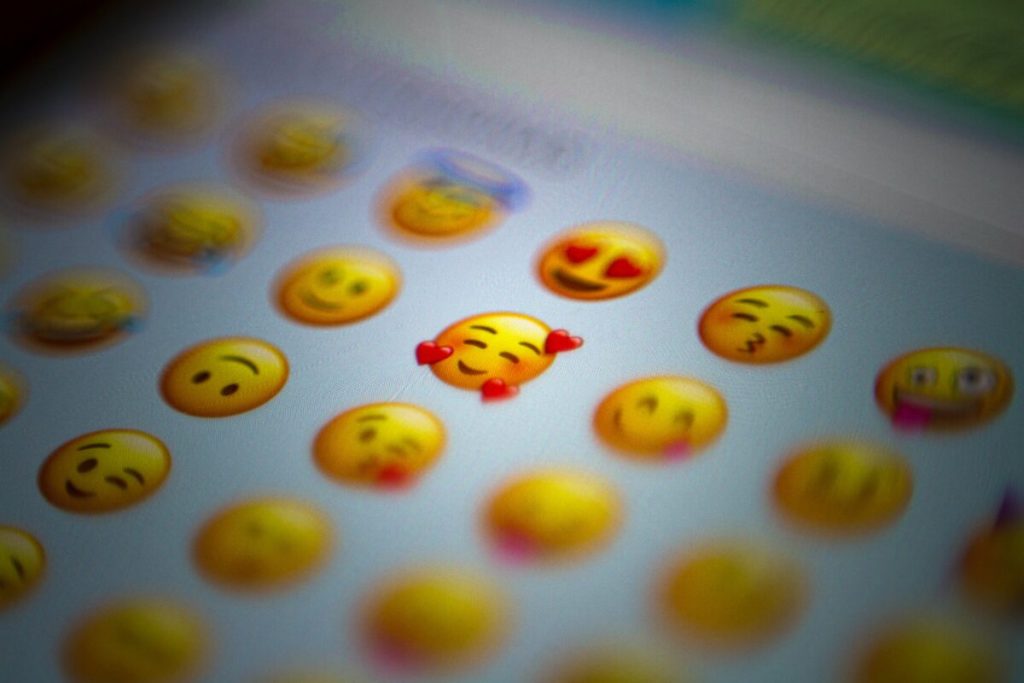
Should we use emojis in B2B marketing?
So, after all this the question remains: should you use emojis in science marketing? Luckily for us, there have been ample studies, both small and large, and the evidence is pretty overwhelmingly in one direction.
One simple A/B study ran two ads with exactly the same content side-by-side on Twitter with one ad including emojis and one without. The results were pretty telling. The emoji-containing ad saw 25.4% higher engagement and 22.2% lower cost per engagement.
Another study looked at including emojis in email subject lines and found some interesting cultural differences. While some mainland European countries, such as Spain or France, did not particularly alter their open rates with the inclusion of emojis, with France actually taking a small dip, the UK and the US were a totally different story. The study found that, on average, Americans were 43% more likely to open emails with emojis in the subject line, growing their open rates to 27-29%, depending on the emoji used, compared to a 19.5% control.
There’s one more study that is of particular interest to science industry marketing, however. After analysing four billion push notifications for emoji use, a 2020 study found that industries that one would consider more conservative actually benefited the most from emoji use. While B2C-focused industries such as Food and Delivery saw a net increase of 45% in their click-through-rates, B2B industries like Business and Finance saw a net increase of 128% to their click-through-rates, rising from 5.46% to 12.45% and proving once and for all that emojis are not just for consumer-focused businesses.
It’s always worth running some A/B tests to see if content featuring emoji use will work for you and your unique audience, but hopefully the above studies have at least given you some drive to try it out. Pharmaceutical marketing, similar to the financial industries in the study above, has been slow to adopt these new trends, yet a lot of potential awaits early adopters.
So yes, use emojis in your B2B scientific marketing until your heart’s content.
If you enjoyed this blog and want to learn more, get in touch with @JoeyRelton and @NotchCom to learn more, or check out ‘The Everyday Science of Emojis’ podcast on The Scientific Podcasting Network.
Scientific advancement is dependent on communication between many different groups of people, including when presenting new findings to the wider world. Good communication is therefore crucial to the success of science, and in a time of fake news and sensationalist journalism, it’s perhaps more important than ever to effectively and meaningfully engage with the audience.
In this quest for inspiring diverse audiences with the latest scientific innovations, there is great potential for exploring methods outside of the conventional means of science communication, such as writing or presentations. Studies have shown that drawing on narratives and evoking emotion is an effective means of communicating science and promoting retention of knowledge. Science documentaries such as the BBC’s hugely popular Planet Earth and Blue Planet series use this approach to bring awareness to pressing topics, including climate change. Moving away from literal representations of science, sci-art is a growing discipline. This involves fusing science with visual art to produce an aesthetically engaging depiction of a topic, promoting interest and learning. And it doesn’t end there. In honour of International Dance Day, we are exploring the use of dance as a creative means of science communication. Read on to learn more.
Dance and narrative: a classical combination
Dance is an art form with a huge potential for visually portraying narrative and emotion. It has always been a medium for not only entertainment, but also for telling stories. It is intrinsically emotional, both for the dancer and the audience. Some studies suggest that audiences attribute characterisation and emotion even to abstract dances. Considering the appeal of visually representing science and the impact that narrative can have on emotional engagement and knowledge retention, does dance offer untapped potential for communicating scientific ideas?
In the spirit of scientific investigation, the combination of science and dance has begun to be explored.
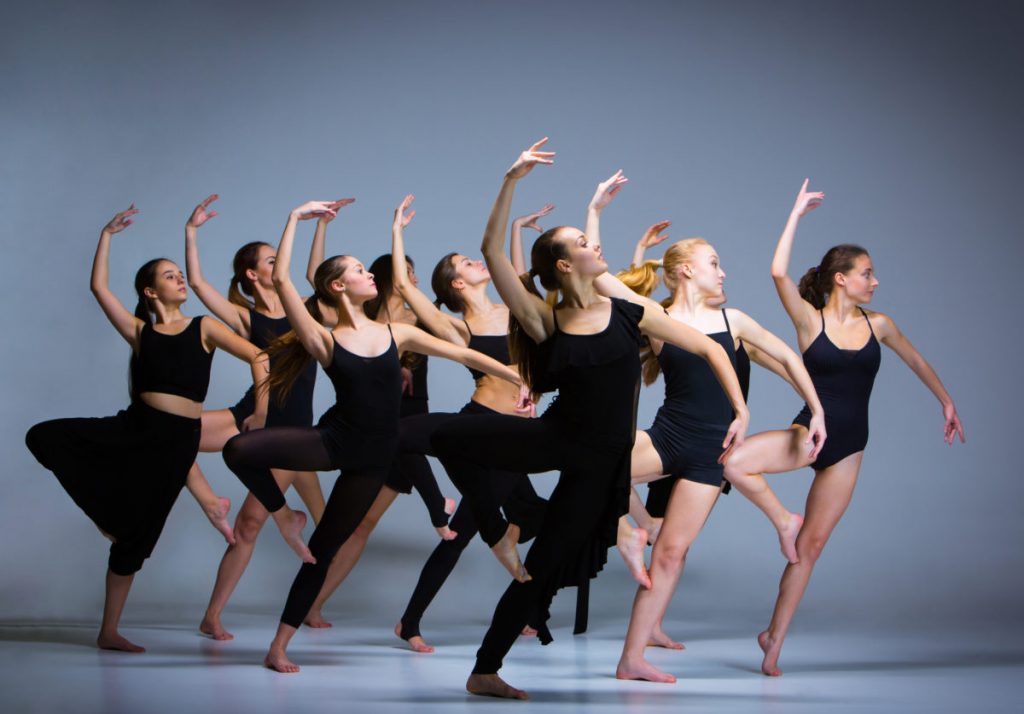 Research suggests that dance can be an educational tool in the classroom. It can help students to understand complex concepts in a kinaesthetic way, or even be used in a research context, as an initial alternative to computer modelling. Beyond this, there are also some exciting examples of how dance performance can be used to enhance spoken information and entertain, engage and inform audiences about scientific topics.
Dance your PhD
The ‘Dance Your PhD’ contest has been running since 2008, inviting researchers to portray their PhD through dance. Entries cover scientific topics ranging from developmental biology and neuroscience to the electro-dynamics of superconductors, even continuing with social distancing measures in place.
Whilst dance background and training differ between entrants – and some entries seem more like an exercise in film-making or song-writing than in choreography – there is something very engaging about watching people physically represent their own research. And if audience engagement is the main goal of science communication, maybe they’re onto something. The creator of the contest, John Bohannon, explores this potential in his TED talk, ‘Dance vs. PowerPoint’. Part way into the talk, several dancers from the Black Label Movement dance company join Bohannon on stage and enact the concepts he describes, including his description of the physics of superfluids. The talk – or rather, performance – effectively makes the point that dancers can help to convey ideas to an audience in a captivating and compelling way, even when those ideas are as complex as lasers and particles.
The art of balance
In most of the explorations into dance performance for science communication, the dance is supported by words, either written, spoken or sung. This is inevitable in a discipline as complex as science, so it may be a challenge for dance to stand alone as a science communication tool. However, it clearly has the power to enhance the communication of otherwise complex and un-memorable information, embodying the narrative and eliciting emotion.
Whilst science will continue to rely on the careful and descriptive use of words to communicate findings, it is exciting to consider the possibilities of art forms such as dance in engaging with a wider audience.
 If this blog made you feel like dancing, waltz on over to Twitter and get in touch with @GabyAtNotch, and follow @NotchCom for more content.
Further reading
- Dhanapal, S., Kanapathy, R. and Mastan, J. (2014). A study to understand the role of visual arts in the teaching and learning of science. Asia – Pacific Forum on Science Learning and Teaching, 15(2), pp.1–25.
- Ellison, A., LeRoy, C., Landsbergen, K., Bosanquet, E., Borden, D., CaraDonna, P., Cheney, K., Crystal-Ornelas, R., DeFreece, A., Goralnik, L., Irons, E., Merkle, B., O’Connell, K., Penick, C., Rustad, L., Schulze, M., Waser, N. and Wysong, L. (2018). Art/Science Collaborations: New Explorations of Ecological Systems, Values, and their Feedbacks. The Bulletin of the Ecological Society of America, 99(2), pp.180-191.
- Georgieva, E. (2013). Science Choreography: Dance and Science in Education, Research, and Performance. Faseb Journal, 27, pp.Faseb Journal, 2013 Apr, Vol.27.
- Gervasio, A.H. (2012). Toward a Psychology of Responses to Dance Performance. Research in Dance Education, 13(3), pp.257–278.
- Jamieson, K.H.H., Kahan, D.A. and Scheufele, D.A. (2017). The Oxford Handbook Of The Science Of Science Communication, Oxford University Press.
- Negrete, A. and Lartigue, C. (2019). The science of telling stories: Evaluating science communication via narratives (RIRC method). Journal Media and Communication Studies, 2(4), pp.98-110.
- Tyng, C. M., Amin, H. U., Saad, M. and Malik, A. S. (2017). The Influences of Emotion on Learning and Memory. Frontiers in psychology, 8, p.1454.
Are dogs truly man’s best friend?
With working from home now a common occurrence for many across the UK, every day has been Bring-Your-Pet-To-Work day. The cost of a puppy doubled over the course of 2020 and the nation has gone pet-mad, revelling in the increased opportunities to play with their beloved furry friend throughout the working week. But amongst all the gravy bones and fluffy toys it’s got us here at Notch wondering – why DO we love our pets so much?
As stated by the researcher John Bradshaw, dogs don’t provide the human race with any services that are essential to our survival. Unlike babies, pets don’t harbour the opportunity to continue our genes, and unlike other animals they don’t offer us food or clothing materials. They are merely an expense that builds year on year as more products and pet safety procedures are introduced. So, what is it about dogs that makes us tolerate the £500 cheques for chipping and furry wake-up calls? There have been many theories to explore this, each one presenting a new angle to explain the timeless wonder.

Hormonal Response: The ‘Gooey Warm Feeling’
One theory to explain why we love pets is hormonal response. A review of Meg Daley’s book, ‘Made For Each Other’, states that animals appear to have cells directly under their skin that activate the hormone oxytocin in the brain and the top of the spinal cord. Levels of oxytocin in the body, also known as the ‘love hormone’, tend to rise significantly when stroking animals – a response similar to that experienced when kissing, touching or breastfeeding. According to Daley, the optimum number of strokes to achieve this response is 40 per minute, and the oxytocin produced drives us to nurture and form an attachment with our pets that is similar to that of mother and child.
Whilst touch plays a big part in the release of this hormone, it’s not the only sense. There is also a correlation between time spent looking into the eyes of dogs and the gazer’s oxytocin levels. Therefore, between stroking and eye contact, this is how the bond is said to be formed that keeps pets under our roofs and in our hearts.
Communication is Key
In a report written by Estep and Hetts, the development and similarity of communication systems is another explanation for why certain animals, such as dogs, are man’s best friend. Humans are social creatures by nature, and the highly developed systems of communication that these animals present make humans more likely to interact and form attachments. Estep and Hetts list dogs and horses as two animals with highly sophisticated systems, whilst cats and guinea pigs tend to have less structured systems – explaining the occurrence of familiar human conditions such as separation anxiety in dogs, but not in other common household pets.
Genetics
Alternatively, a recent study published in Science suggests that the untimely bond between man and dog is more biological than behavioural. Through the analysis of 27 ancient dog genomes, a link between ancient humanity and dogs can be established, leading us to believe that such a friendship has existed for more than 11,000 years. The study shows that this historic connection runs deeper than just time however, with many similarities apparent between the two ancient genetic profiles.
Culture
Harold Herzog of Western Carolina University reduces our love of pets to mere trends and norms. He states that pet-keeping is purely cultural, with some cultures keeping pets because their cuteness is established and domestication approved. In these cultures, he suggests pet-keeping to be a ‘socially contagious’ trend that is continuously reinstated by its own popularity. This is whilst other cultures, such as the Kenyan Kiembu tribe and South Korean civilians, only know dogs as a means for protection or even just a late-night snack! But what do you think?
Get in touch with @EveAtNotch and @NotchCom on Twitter to let us know where you stand!